When Hope Stretches You Thin...
Hope, when you hear this word, what do you think of?
How do you use the word? "I hope you're OK. I hope things will get better..." It's soft, like a feather or lambswool. Something like a candle in the dark or a warm feeling...
But the Bible’s original language tells a very different story.
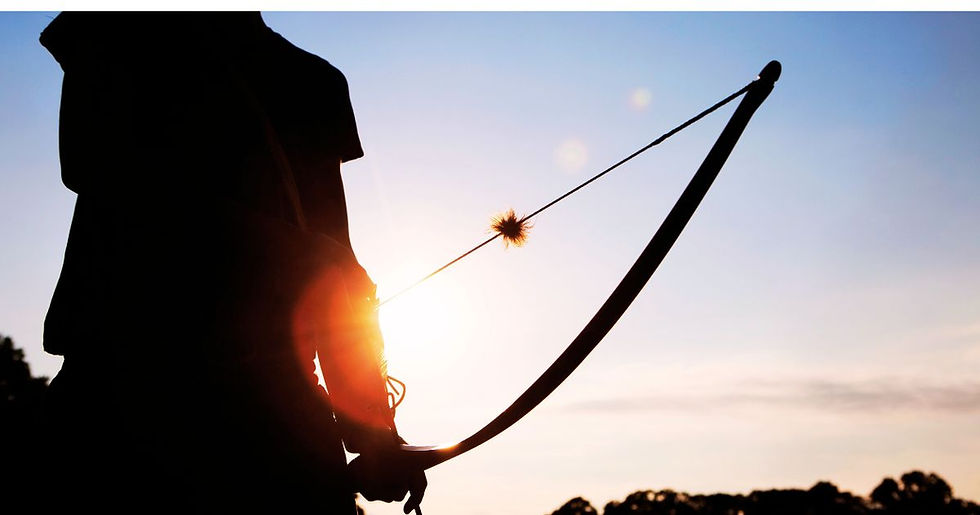
In Hebrew, the primary word for hope is qavah, a verb that means to bind together by twisting; to stretch a cord tight. It’s not passive comfort. It’s tensile strength. It’s what happens when your life is pulled between where you are and where God is leading you.
Hope, in the Bible, is not a mood. It’s a stretch.
And if you’ve ever felt that stretch, you know it can feel like too much - especially when the thing you’re waiting for seems to take forever. Proverbs captures that ache with painful honesty:
Hope deferred makes the heart sick—Proverbs 13:12
The Bible is honest about both the strength and the sorrow of waiting.
Hope Is a Stretch, Not a Wish
When Scripture uses qavah, it’s drawing on a physical picture: a cord stretched tight, pulled between two points. That stretched cord carries both tension and direction. It creates strength as it bears weight.
That’s what biblical hope looks like.
It’s not optimism.It’s not pretending everything is fine. It’s not passive waiting.
It’s active expectancy, living stretched toward God’s future while standing firmly in the present.
What God Is Doing in the Stretching
Scripture suggests He is doing three things in those stretched places.
He is strengthening what He started in you
Isaiah 40:31 famously says:
“Those who hope (qavah) in the Lord will renew their strength.”
The verse doesn’t mean people walking through tension suddenly become superhuman. It means that God meets you inside the tension and infuses strength you cannot manufacture on your own.
The very act of being stretched becomes the place where His power enters your weakness.
He aligns you with the future He’s preparing
A pulled cord isn’t random; it’s going somewhere. In the Bible, waiting seasons are rarely about delay for delay’s sake. They are about alignment:
clarifying desires
smoothing out misaligned priorities
preparing capacity
stripping away what cannot survive the next season
In other words, God uses tension to pull your life into the shape of what’s coming.
Waiting is not wasted. It’s preparatory.
He deepens your attachment to Him
The root of qavah also carries the idea of fibres twisted together to form a stronger cord. It’s not just you being stretched, it’s you being woven into God’s strength.
Hope is the place where your life becomes entangled with His:
Your fear woven into His peace
Your confusion into His wisdom
Your weakness into His resilience
Waiting is designed to deepen the bond between you.
But Then Comes the Hard Part: Hope Deferred Hurts!
If that’s all hope was - empowerment, alignment, and attachment - we’d gladly embrace it. But the Bible doesn’t romanticise hope. It acknowledges the painful truth:
“Hope deferred makes the heart sick.” — Proverbs 13:12
Exhausted. Drained. Bruised on the inside.
The Hebrew doesn’t soften the phrase. When what you’re stretched toward keeps being pushed further away, your inner life feels battered. This isn’t a sign of weak faith. It’s the human cost of prolonged tension.
And here’s the important part. Scripture is saying God understands that cost. He doesn’t stand above it, telling you to keep smiling. He tells the truth about it so you can stop pretending you’re not hurting.
The very next verse says:
“But a desire fulfilled is a tree of life.”
Meaning: your heart was designed for fulfilment - real fulfilment - not endless deferral. Your longing is not a flaw. It’s part of how God made you.
So How Do These Two Truths Fit Together?
It seems contradictory: hope strengthens you, and hope can make you heartsick. But in the Bible, the tension makes perfect sense.
God uses waiting — but He never intends it to be indefinite
Every biblical season of waiting has a horizon. Abraham, Joseph, Hannah, David, the exiles, all reached fulfilment.
The sickness comes when we can’t see the horizon.
The heartsickness is our experience; the renewal is God’s activity
Proverbs tells us what waiting feels like. Isaiah tells us what waiting accomplishes.
They’re two sides of the same reality.
Longing hurts because hope is alive
A dead hope cannot be deferred. Only a living, breathing, God-planted desire can ache.
Your ache is proof of life, not failure.
So What Does God Want From You in the Heartsick Stretch?
Surprisingly, not more endurance or more performance. Not “just trust.”
Scripture shows God consistently inviting three simple things:
Honest lament
Biblical hope has room for crying out. The Psalms are full of it. God isn’t asking for stoicism; He invites truthfulness.
Nearness
He draws near to the brokenhearted. Not to lecture them, but to sit with them. Presence is the gift He gives in the delay.
Consent, not heroics
Waiting with God isn’t about white-knuckling. It’s about quiet consent: “Here I am. Keep me close. Carry me forward.” God is after closeness, not toughness.
The Beauty of the Stretch
When we imagine hope, we often think of it in pastel shades. But the Bible gives us something far more honest and far more beautiful.
Hope is a stretch. Deferred hope is a heartache. Fulfilled hope is a tree of life.
And through every stage, God is not distant. In the tension, He strengthens. In the delay, He sits with us. In the fulfillment, He restores us.
If you are in the stretch right now (thin, tired, and aching) your story is still in motion. God is not finished, and He has never been closer. He believes in you.


Comments